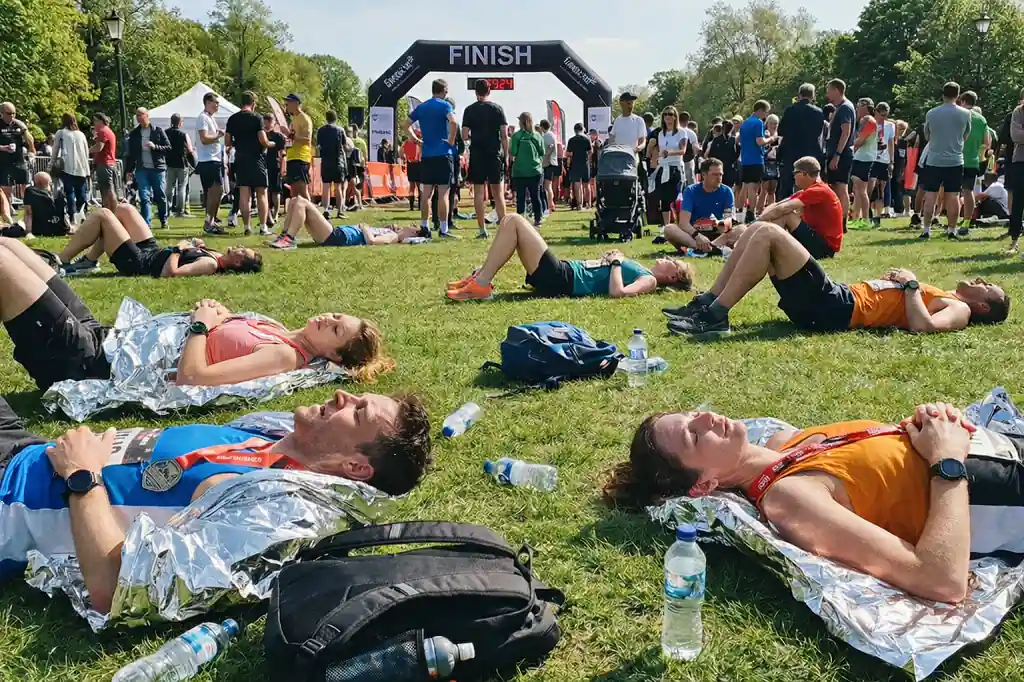
Marathon recovery tips are important as soon as you finish a marathon. Running 26.2 miles is a big deal but the hard work does not stop when you get your medal.
The next morning is usually when you feel the effects. Your legs feel heavy your feet look swollen. Stairs seem really hard to climb.
If you want to recover from a marathon you should focus on the basics. In this guide I will break down the marathon recovery tips, the gear that helps and the mistakes that slow people down.
A lot of runners look for gadgets right away. I would not do that. I would start with a simple tools, good food, water, sleep and a realistic plan.
Quick Gear Guide: What Actually Helps
Here is a simple look at the best marathon recovery tips and gear by goal.
| Recovery goal | Best gear | Budget option | My take |
|---|---|---|---|
| Swollen feet | Recovery slides | Cushioned sandals | Worth buying first |
| Rehydration | Electrolyte mix + bottle | Water + salty snack | High value, low cost |
| Sore calves and quads | Foam roller | Standard high-density roller | Basic but effective |
| Deep tight spots | Massage gun | Lacrosse ball | Helpful, but not essential |
| Heavy legs | Compression boots | Compression socks | Boots feel great, socks save money |
| General soreness | Cold tub or cold roller | Frozen water bottle | Use when swelling feels high |
| Better sleep | Sleep tracker | Dark room + routine | Routine beats gadgets |
| Foot pain | Massage ball | Frozen bottle | Simple and underrated |
If your budget is tight, buy these first: recovery slides, electrolyte mix, a foam roller and a foot massage ball.
Why Marathon Recovery Tips Matter After 26.2 Miles
A marathon can leave you with more than a sense of pride and finish-line photos. It can also leave you with small muscle tears, tired joints, and drained fuel stores.
Your body uses stored carbohydrates during runs. By the end of a marathon, those stores are low. Your muscles feel weak and flat.
You get DOMS, or delayed onset muscle soreness. That is a fancy way of saying your muscles will hurt later often one or two days after a hard run.
People often think lactic acid is the reason for next-day pain. That is not entirely true. Your body gets rid of it quickly. The real soreness usually comes from muscle damage and inflammation after the race.
Good recovery helps in three ways. It improves blood flow, reduces discomfort and makes it easier to eat, drink, sleep and move again.
That is where good tools for recovery can help. They do not perform magic. They just make it easier to stick to the basics.
The 10 Best Marathon Recovery Tips & Essential Gear
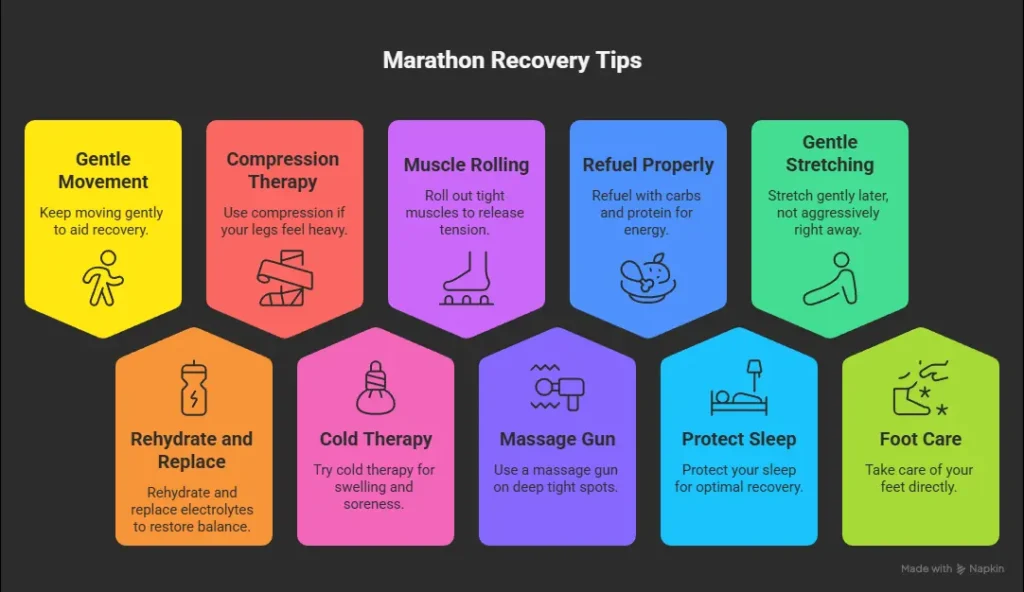
Here is the quick version first:
- Keep moving gently
- Rehydrate and replace electrolytes
- Use compression if your legs feel heavy
- Try cold therapy for swelling and soreness
- Roll out tight muscles
- Use a massage gun on deep tight spots
- Refuel with carbs and protein
- Protect your sleep
- Stretch gently later, not aggressively right away
- Take care of your feet directly
1. Keep Moving with Active Recovery
Do not sit in a chair for hours after a marathon. Gentle movement helps your blood keep circulating. That usually makes your legs feel less stiff.
I see this all the time after races. One runner sits down for an hour. Struggles to stand up later. Another runner walks for ten minutes. Looks much better by lunch.
Start simple. Walk around after you finish the marathon. Walk again that day. Keep it easy and short.
This also helps you figure out what to wear after a marathon. Your race shoes might feel awful once your feet swell.
Helpful gear:
- Recovery slides, such as OOFOS or HOKA Ora
- Dry socks
- Loose joggers or shorts that do not squeeze your waist
Recovery slides are important because they take pressure off your feet. If you only buy one thing I would start with that.
2. Rehydrate and Replace Electrolytes
One of the most important marathon recovery tips is to start drinking water within the first hour after the marathon. Water helps. Aim for about 500 ml per hour. Many runners also need sodium and potassium after sweating for hours.
Just drinking water can leave you feeling a bit flat if you have lost a lot of salt. That is why many runners feel better with a mix, not just water alone.
Keep it practical. Sip your drink do not chug it. If your stomach feels upset use drinks over 30 to 60 minutes.
Helpful gear:
- Handheld bottle or shaker bottle
- Electrolyte mixes like LMNT or Liquid I.V.
- salty snacks like pretzels
One thing to be careful about is that some strong mixes can taste great but upset your stomach. Test your drink choices before race day not after it.
More on sodium replacement after endurance events.
3. Flush Out Heavy Legs with Compression Therapy
Do compression boots work for runners? They can help, especially when your legs feel swollen and dull.
Compression boots squeeze your legs in waves from your feet to your hips. That pressure can improve circulation. Reduce the stuffed heavy feeling after a race.
Boots feel amazing. They are expensive. For runners compression socks can be a better value.
I would only buy boots if you race often recover hard after runs or share them with a partner. If not socks handle the basics well.
Helpful gear:
- Compression boots like Normatec or Therabody RecoveryAir
- Compression socks for a cheaper option
Pros:
Great for swelling
Easy to use while resting
Cons:
Expensive
Not every runner notices a huge difference
4. Reduce Inflammation with Cold Therapy
Cold can help calm down your legs. If your feet, ankles or calves look swollen cold therapy often helps.
You do not need to take a cold plunge. A short cold soak, an ice bath tub or even a cold massage roller can do the job.
Most runners do well with a session. Think about comfort first. You are trying to lower soreness not prove how tough you are.
I like cold therapy most when swelling is a problem. I like it less when the main issue is stiffness without swelling.
Helpful gear:
- Portable cold tub
- Cold massage roller
- Ice packs
- Frozen water bottle for your feet
One thing to keep in mind is that cold can reduce pain fast. You do not need it after every hard run. Save it for times when you feel beat up.
More on the effects of cold water immersion and active recovery.
5. Roll Out Tight Muscles
A foam roller is still a tool. It helps many runners loosen up calves, quads, glutes and hips.
Use passes and breathe. Do not make it a punishment session. If you grit your teeth the time you are doing too much.
One important detail is that people love to focus on the IT band area. I would focus more on the side glutes and quads instead. That usually feels better. Works better.
Vibrating rollers feel nice. A standard high-density foam roller works just fine.
Helpful gear:
- Standard foam roller
- Vibrating foam roller
- Yoga mat for floor work
Best areas to target:
- Calves
- Quads
- Glutes
- Upper hamstrings
Find out more about foam rolling training effects.
6. Target Deep Tissue Knots with a Massage Gun
Massage guns are great when one spot feels worse than everything. Think glutes, hamstrings, calves or the outside edge of the quad.
Use sessions. Thirty to sixty seconds on one area usually does enough. Keep the gun moving and stay off bones and joints.
A massage gun will not fix pain. It will not solve an injury. It can make sore muscles feel less sore which makes walking and stretching easier.
If you sit at a desk the day after a race this tool can feel especially useful. A quick pass on the calves before you stand up can help a lot.
Helpful gear:
- Massage guns like Theragun or Hypervolt
- Softer attachment heads for tender muscles
Pros:
- Great for soreness
- Fast and easy to use
Cons:
- Easy to overdo
- Not a substitute for resting
More about percussive massage therapy and recovery you can find out here.
7. Refuel with High-Quality Protein and Carbs
When runners say they feel beat up for days after a marathon I always ask them what they ate after the race. Sometimes they say they had a beer. That is it. That is not good enough. Your muscles need carbs to refill fuel, and they need protein to repair the work you just did.
A simple target is a 3:1 ratio of carbs to protein. That is not a strict law, but it works well for many runners.
This meal does not need to look fancy. A banana and recovery shake works. So does chocolate milk and a bagel. So does rice with eggs or chicken if real food sounds good.
You need a plan to help your body recover. Here are some things that can help:
- Recovery protein powder
- Shaker bottle
- Easy-to-digest snacks
Some good ideas for food are:
- Chocolate. A banana
- A bagel with yogurt
- A rice bowl with protein
8. Prioritize High-Quality Sleep
Another marathon recovery tip is to get good sleep, which is also very important. Your body does a lot of repair work while you sleep. The night after a marathon can be weird. You might feel tired. Your body is still feeling the effects of the race. That is normal.
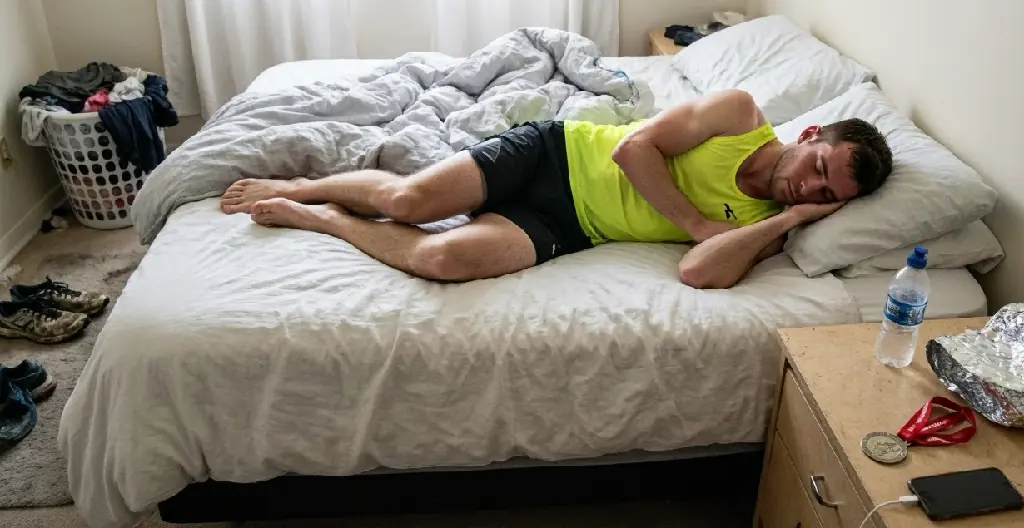
To help you sleep try to:
- Eat and hydrate early
- Take a shower
- Dim the lights
- Put away your phone
- Sleep in a dark room
Some gear that can help you sleep is:
- Sleep tracker
- Eye mask
- Weighted blanket
- Blackout curtains
I think the important thing is to protect your sleep time. Do not stay up late looking at your phone. Watching TV.
You can learn more about sleep and recovery here.
9. Stretch Gently with Resistance Bands
After a marathon it is also important to stretch gently. Do not try to stretch much right after the race. Your muscles are already sore. Wait until the day or later in the week. Then use resistance bands. Do some gentle mobility work.
Helpful gear:
- Light mobility bands
- Loop bands
- Yoga strap
The best time to do this is from Day 2 to Day 7 after the marathon. Just do short sessions of 5 to 10 minutes. This might seem boring. It works.
10. Relieve Foot Pain Directly
It is also important to take care of your feet. They take a beating during a marathon. If you do not take care of them the rest of your body might feel bad too.
Try rolling your arches with a spiky massage ball or a frozen water bottle. This can help relieve pain.
Helpful gear:
- Spiky foot massage ball
- Water bottle
- Recovery slides
If you have sharp heel pain stop running and take care of it.
Post-Marathon Recovery Timeline: Day by Day
This post marathon recovery tips timeline keeps expectations realistic. Most runners feel better when they stop trying to rush Day 3.
| Time frame | What to do | Gear that helps |
|---|---|---|
| Day 1, race day | Walk a little, sip fluids, eat simple carbs and protein, change shoes | Recovery slides, bottle, electrolyte mix, shaker bottle |
| Days 2-3 | Short walks, easy mobility, foam rolling, light massage gun work | Foam roller, massage gun, foot ball, compression socks |
| Days 4-7 | Light cross-training, gentle stretching, lots of sleep, keep hydration high | Mobility bands, cold roller, sleep tools |
| Days 8-14 | Try short, easy runs only if sharp pain is gone | Cushioned shoes, compression socks if you like them |
Remember, if your stride still feels awkward you are not ready to run yet.
Frequently Asked Questions about Marathon Recovery Tips (FAQs)
How long does it take to fully recover from a marathon?
Most runners need 2 to 4 weeks to fully recover from a marathon. Your muscles heal, your nervous system calms down, and your energy stores refill during that window. Newer runners and people who raced all-out often need closer to the full month.
Should I take an ice bath after a marathon?
Yes, an ice bath after a marathon can cut soreness and swelling, especially in the first few hours. Cold water narrows blood vessels for a short time and numbs pain. If you hate cold plunges, use a cold roller or alternate warm and cold showers.
Do massage guns work for marathon recovery?
Yes, massage guns can help marathon recovery when you use them on sore spots for short sessions. They increase local blood flow and make tight muscles feel less stiff. They will not fix serious pain, but they work well for calves, quads, and glutes.
Is it okay to walk the day after a marathon?
Absolutely. A short walk the day after a marathon counts as active recovery. It keeps blood moving, loosens stiff legs, and often helps more than staying in bed. Keep the pace easy, keep the distance short, and stop if your stride feels sharp or awkward.
When should I start running again after a marathon?
Most runners should wait 7 to 10 days before trying an easy run. Start with short, slow miles, not speed work. If you still feel sharp pain, heavy limping, or deep fatigue, give yourself more time. Your next block matters more than one rushed test run.
Final Thoughts
Finally remember that recovering from a marathon is important. You need to take care of your body. The best plan is usually simple. Just follow these simple marathon recovery tips: walk, drink, eat, sleep and use a few tools. You do not need every gadget, on the market. Just start with the basics. Add more as you need them.