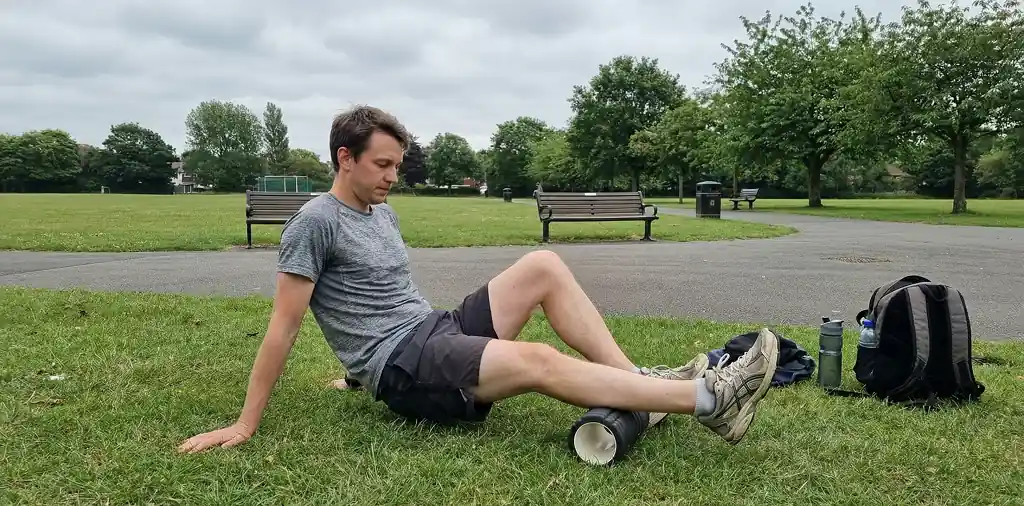
Active recovery for runners works best when the gear matches the problem.
That sounds obvious. Still, plenty of runners buy recovery tools before they know what they need.
Then the foam roller ends up under the bed. The massage gun gets used twice. The expensive compression boots turn into a chair for clean laundry.
The better approach is simple. Match the tool to the job.
A foam roller can help broad leg soreness. A massage ball can help with tight feet and calves. Resistance bands often help stiff hips more than any gadget. Compression tools may feel great when your legs feel flat and heavy after a long run.
This guide sorts recovery gear by goal, not hype. It also explains what helps, what probably helps, and what is not worth buying for most runners. Recovery gear supports good habits. It does not replace sleep, enough food, easy movement, or smart training.
Quick Answer: What Is the Best Recovery Gear for Runners?
The best recovery gear depends on your main issue. Foam rollers suit general soreness. Massage guns target stubborn knots. Compression socks or boots may help heavy legs. Resistance bands support mobility. Massage balls help feet and calves. Start with the tool that solves your most common post-run problem.
Best Gear by Recovery Goal at a Glance
| Recovery Goal | Best Gear | Why It Helps | Best For | Typical Price Range |
|---|---|---|---|---|
| General leg soreness | Foam roller | Covers large muscle groups fast | Most runners | Low to moderate |
| Tight knots or trigger points | Massage gun | Targets one spot at a time | Calves, glutes, hamstrings | Moderate to high |
| Heavy legs after long runs | Compression boots or compression socks | May improve comfort and circulation | Long-distance runners | Socks low, boots high |
| Tight calves, arches, plantar fascia | Massage ball or slant board | Helps feet and lower legs | Road runners, people on their feet all day | Low |
| Stiff hips or glutes | Resistance bands | Supports movement and activation | Desk job runners, beginners | Low |
| Post-run comfort while walking | Recovery slides or sandals | Cushions tired feet | After long runs or races | Low to moderate |
| Low-cost setup | Roller + band + ball | Covers soreness, mobility, and feet | Beginners, budget shoppers | Low |
| Travel recovery | Mini band + ball + compression socks | Fits in a small bag | Frequent travelers | Low |
What Active Recovery for Runners Really Means
Active Recovery vs Passive Recovery
Active recovery for runners means easy movement. Think walking, gentle cycling, light band work, or short mobility drills.
That light movement can help blood flow and reduce stiffness. It can also make your legs feel less stuck the next day.
Passive recovery means rest without movement. Sleep, sitting, lying down, and full rest all fit here.
You need both. After hard training, runners often benefit from sleep and food first. Then they add a little easy movement.
How Recovery Gear Fits In
Recovery gear should make that process easier. Good tools support comfort, gentle movement, and short recovery routines.
They may help with short-term soreness, mobility, and post-run comfort. But they do not cure injuries. They also do not fix under-fueling, poor sleep, or training too hard for too long.
If your recovery plan ignores those basics, the fanciest tool will not save it.
When Runners Usually Need Recovery Gear Most
Most runners use recovery tools most often:
- After long runs
- After speed sessions
- After races
- During marathon training
- During back-to-back hard weeks
- When calves or hips tighten again and again
A common example is the desk-job runner. They finish intervals feeling fine. The next morning, their hips feel locked. In that case, bands and light mobility often help more than heavy massage.
How We Chose the Best Running Recovery Gear
My Evaluation Criteria
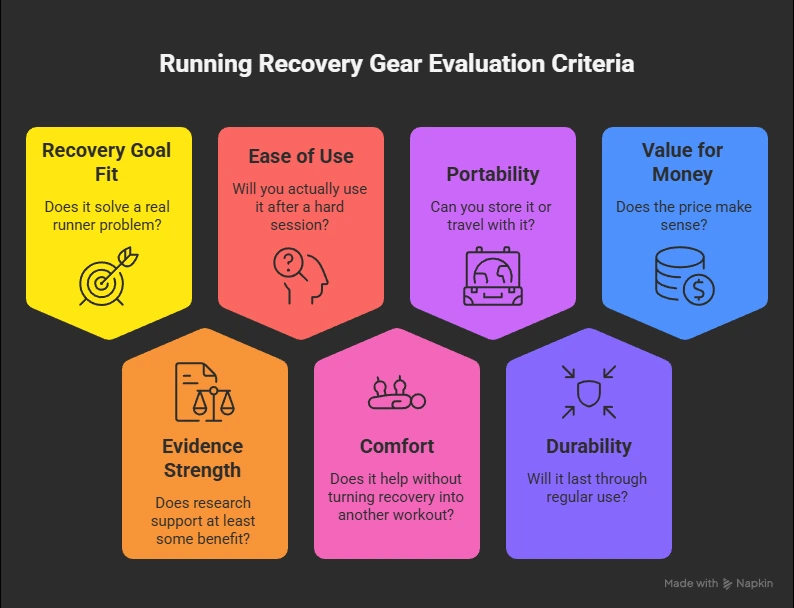
I judged each tool on a simple buying framework:
- Recovery goal fit – Does it solve a real runner problem?
- Evidence strength – Does research support at least some benefit?
- Ease of use – Will you actually use it after a hard session?
- Comfort – Does it help without turning recovery into another workout?
- Portability – Can you store it or travel with it?
- Durability – Will it last through regular use?
- Value for money – Does the price make sense?
What “Worth Buying” Means in This Guide
In this guide, a tool is worth buying if it does four things well:
- Solves a clear problem
- Feels easy to use
- Avoids miracle claims
- Fits real budgets
Best value is not always the most expensive tool.
If I had to build a runner’s recovery setup from scratch, I would start cheap. A roller, a band, and a massage ball cover more situations than one expensive device.
Best Gear for Active Recovery for Runners by Goal
The right active recovery for runners setup usually looks pretty simple. Most runners need one broad tool, one movement tool, and one small tool for tight spots.
For General Muscle Soreness and Next-Day Stiffness: Foam Roller
Best for: Quads, calves, hamstrings, glutes, and general post-run soreness
Why it helps: A foam roller works well when your whole leg feels beat up. Research suggests foam rolling can improve range of motion and reduce the feeling of soreness in the short term.
What to look for before buying:
- Soft density if you are new
- Firm density if you already tolerate pressure well
- Smooth surface for a more forgiving feel
- Textured surface if you like a more intense feel
- Full-size roller for home use
- Travel-size roller for gym bags or trips
Typical price range: Low to moderate
Possible downside: It covers big areas, not one exact knot.
Who should skip it: Very few runners. This is the safest first buy for most people.
My take: If you own only one recovery tool, buy this first. It gives the best value for most runners.
What it cannot do: It may help you feel less stiff. It will not “flush toxins” or replace sleep.
More about foam rollers for runners
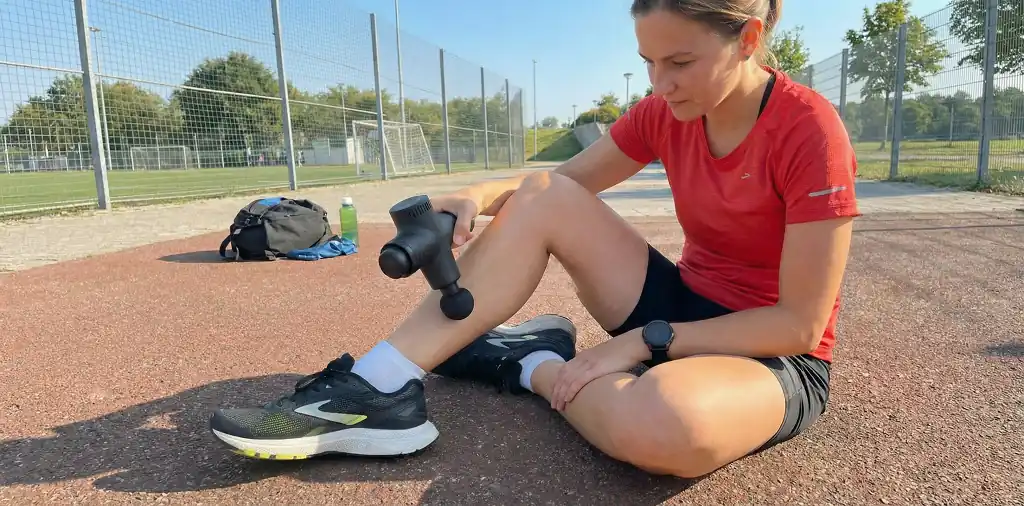
For Tight Knots and Targeted Relief: Massage Gun
Best for: Calves, glutes, upper hamstrings, and stubborn tight spots
Why it helps: A massage gun works better than a roller when one area feels locked up. It lets you target a smaller spot fast. Research on percussion devices looks promising, but it is still smaller than the foam rolling research base.
A real-world example helps here. If your left calf always tightens after hill repeats, a massage gun can save time. You do not need to roll your whole leg to reach one hot spot.
What to look for before buying:
- Several speed settings
- Low noise
- Good battery life
- Comfortable grip
- Useful attachment heads, not a box full of extras
Typical price range: Moderate to high
Possible downside: Easy to overdo. Too much pressure can make a sore spot angrier.
Who should skip it: Runners who want a simple, low-cost starter tool
Safety note: Do not pound sharp pain, bruises, swollen areas, or bony points.
7 Key Gun Massage Benefits for Running Recovery
For Heavy Legs and Better Circulation After Long Runs: Compression Boots or Compression Socks
Best for: Long-distance runners and anyone who feels flat, heavy, or puffy after big mileage
Why it helps: Compression may support comfort and blood flow. Evidence is mixed, especially for expensive boots. Still, many runners like how their legs feel after using compression, especially after long runs or travel. Compression garments have better support than marketing often suggests, but they are not magic.
After a 30 km run, many runners want the easiest option possible. They want to eat, shower, and sit down. That is where compression often fits.
What to look for before buying:
- Correct sizing
- Comfortable pressure
- Easy cleaning
- Simple session controls for boots
- Good fit at the calf and foot for socks
Typical price range:
- Compression socks: Low
- Compression boots: High
Possible downside: Boots cost a lot and take up space.
Who should skip it: Low-mileage runners on a budget
My take: Start with socks. Move to boots only if you train hard enough to justify them.
How to Choose Compression Boots for Athletes
For Tight Calves, Feet, and Plantar Fascia: Massage Ball or Slant Board
Best for: Tight arches, sore feet, calf tension, and ankle stiffness
Why it helps: A massage ball reaches small areas well. A slant board helps you stretch calves and ankles with more control. If you run on roads a lot, or stand all day, this combo makes sense.
What to look for before buying:
- Medium-firm ball for most runners
- Stable board
- Good grip
- A size that fits your foot comfortably
Typical price range: Low
Possible downside: A ball can feel too intense on sore feet if you press too hard.
Who should skip it: Runners with no lower-leg tightness and a very limited budget
If your first steps in the morning hurt, pay attention. That can point to plantar fascia irritation or another foot issue.
For Stiff Hips and Glutes: Resistance Bands
Best for: Hip mobility, glute activation, and runners who sit a lot
Why it helps: Bands support movement, not just pressure. That matters. Runners with stiff hips often need light activation and mobility more than aggressive massage.
What to look for before buying:
- Loop bands for glute work
- Long bands for mobility drills
- A few resistance levels
- Good material
- Non-slip fabric if you hate rolling bands
Typical price range: Low
Possible downside: Bands only help if you use them regularly.
Who should skip it: Runners who hate guided mobility work and know they will not stick with it
My take: This is one of the smartest cheap buys. It works before easy runs, after hard runs, and on rest days.
For Post-Run Comfort and Easy Walking: Recovery Slides or Sandals
Best for: Tired feet after long runs, races, or long days on your feet
Why it helps: Cushioned slides can feel great when your feet feel cooked. They reduce foot stress while you walk around the house or to the car.
What to look for before buying:
- Comfortable arch support
- Soft but stable cushioning
- Secure fit
- Outsole grip
Typical price range: Low to moderate
Possible downside: Great comfort can tempt you to wear them everywhere, even when they do not fit the situation.
Who should skip it: Runners looking for actual treatment for foot pain
These slides can help you feel better. They do not treat injuries.
Best Budget Recovery Kit for Runners
If you want the most useful low-cost setup, buy these three items:
- 1 foam roller
- 1 resistance band set
- 1 massage ball
Why this works:
- Covers general soreness
- Supports mobility
- Helps feet and calves
- Costs far less than premium tools
This is the kit I would recommend to most beginner and intermediate runners.
Best Travel Recovery Kit for Runners
For travel, less is better. Pack these:
- Mini loop band
- Massage ball
- Compression socks
Why this works:
- Fits in a small bag
- Helps after flights
- Useful after destination races
- Easy to use in a hotel room
Foam Roller vs Massage Gun vs Compression Boots
| Tool | Best For | Pros | Cons | Price | Portability | Evidence Snapshot |
|---|---|---|---|---|---|---|
| Foam roller | Broad soreness | Cheap, versatile, durable | Less precise | Low to moderate | Moderate | Best-supported of the three |
| Massage gun | Targeted tight spots | Fast, precise, easy to use | Costs more, easy to overdo | Moderate to high | Moderate | Some support, smaller evidence base |
| Compression boots | Heavy legs after long runs | Comfortable, hands-off | Expensive, bulky | High | Low | Mixed evidence, strong user preference |
Which Tool Is Best for Beginners?
Usually, the foam roller or resistance bands. Both cost less. Both cover more situations. Both also teach useful habits.
A roller helps relieve soreness. Bands help movement. That is a strong starting pair.
Which Tool Gives the Best Value?
Foam rollers give the best overall value. Massage balls win on the lowest price. Bands win if you want a movement-based tool.
If I had only $30, I would buy a ball and a band first. If I had $50 to $70, I would add a roller.
Which Tool Makes Sense for High-Mileage Runners?
High-mileage runners often benefit from a broader setup.
- Compression boots may make sense for frequent heavy legs
- Massage guns help with recurring tight spots
- Foam rollers still offer strong value
The key is frequency. If you run hard five or six days a week, a more targeted setup can pay off.
How to Choose the Right Recovery Gear
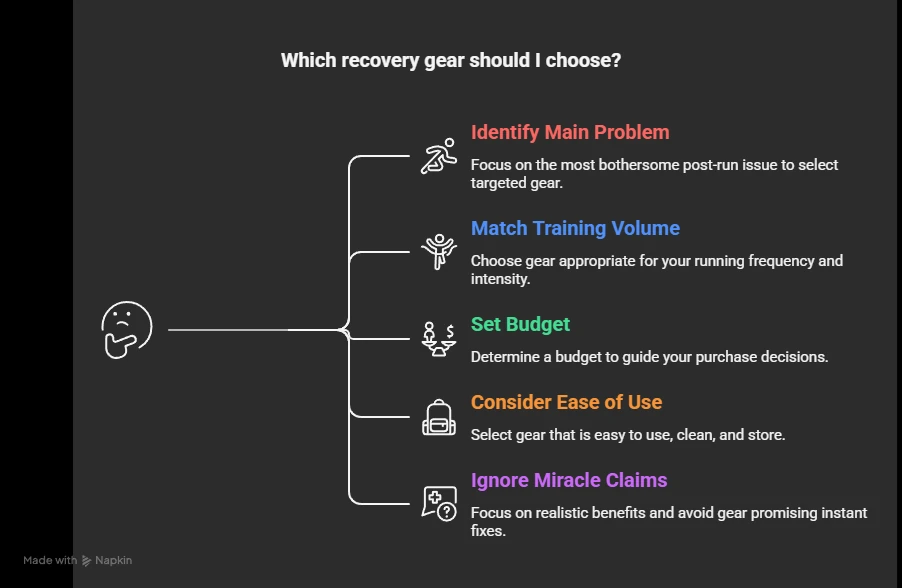
1. Start With Your Main Recovery Problem
Ask one question first. What bothers you most after running?
- Whole-leg soreness
- Tight calves
- Stiff hips
- Heavy legs
- Foot tension
- Travel recovery
Choose the tool that solves that one problem first.
2. Match the Tool to Your Training Volume
Casual runners do not need every tool.
If you run three easy times a week, keep it simple. If you train for half-marathons or marathons, targeted gear may earn its place.
3. Set a Budget First
A budget keeps you honest.
- Under $30: Massage ball, mini band, basic compression socks
- $30 to $100: Foam roller, better band set, entry massage gun
- $100+: Higher-end massage guns or compression tools
4. Check Ease of Use and Storage
This matters more than people think.
Ask yourself:
- Is it noisy?
- Is it easy to clean?
- Can you store it?
- Does it need charging?
- Will you take it on trips?
The best tool is the one you will actually use.
5. Ignore Miracle Claims
No gear replaces food, sleep, and smart training.
No tool fixes every kind of pain. Focus on gear with a clear use case and realistic benefits.
How to Use Recovery Gear Without Overdoing It
A Simple 10-Minute Post-Run Recovery Routine
- Walk for 3 to 5 minutes
- Use a foam roller or massage ball on 2 to 3 areas
- Do 2 or 3 band mobility drills
- Drink fluids and eat a recovery snack
- Stop if pain feels sharp or unusual
That is enough for most days. Recovery should not feel like punishment.
A Weekly Recovery Setup for Runners
- After speed day: Light mobility and foam rolling
- After long run: Easy walk, then compression or ball work
- Rest day: Gentle movement and bands
- Race week: Keep recovery work easy and familiar
Short, regular sessions usually work better than long, painful sessions.
When to Skip Gear and Rest or See a Pro
Sometimes the right move is to stop poking at the problem.
Skip recovery tools and get help if you notice:
- Sharp pain
- Swelling
- Numbness
- Pain that changes your stride
- Pain that lasts more than a few days
- A pain spot that feels deep and focused
Those signs may indicate more than typical soreness.
What Recovery Gear Can and Cannot Do
What It Can Help With
Recovery gear may help with:
- Short-term soreness relief
- Better mobility
- Easier movement on recovery days
- Post-run comfort
- Circulation support
What It Cannot Fix
Recovery gear cannot fix:
- Overtraining
- Poor sleep
- Not eating enough
- Bad training load management
- An actual injury diagnosis
The best recovery gear works with smart training, not instead of it.
FAQ
What is active recovery for runners?
Active recovery for runners means easy movement after hard training. It includes walking, gentle cycling, light band work, and simple mobility drills. The goal is to reduce stiffness, support blood flow, and help you move better the next day.
It should feel easy, not tiring. If it feels like another workout, you went too hard.
What is the best active recovery gear for sore legs after running?
For most runners, a foam roller is the best first choice for sore legs after running. It covers large muscle groups, costs less than most gadgets, and has decent evidence for short-term soreness relief and mobility support.
If one small spot feels especially tight, a massage gun may be more effective.
Is a foam roller or a massage gun better for runners?
A foam roller is more effective for generalized soreness across the quads, hamstrings, calves, and glutes. A massage gun is more effective for a single stubborn tight spot. Most runners get more value from a roller first, then add a gun only if they need more targeted relief.
That is the practical answer for most budgets.
Do compression boots help runners recover faster?
Compression boots may help some runners feel better after hard training, especially after long runs. The evidence on faster recovery is mixed. Many runners like the comfort and the reduced heavy-leg feeling, but boots do not replace sleep, food, or easy movement.
If you are unsure, start with compression socks.
What recovery gear should beginner runners buy first?
Beginner runners should typically purchase a foam roller and either a resistance band or a massage ball. That setup remains affordable, addresses common recovery issues, and encourages useful habits rather than gadget collecting.
It is a smarter first step than jumping to expensive devices.
Can recovery gear prevent running injuries?
Recovery gear may support mobility, comfort, and body awareness, helping runners maintain consistency. Still, it does not prevent injuries on its own. Smart training, strength work, enough recovery, and sensible mileage increases matter much more.
Use gear as support, not protection.
How often should runners use recovery gear?
Most runners do well with short, regular sessions a few times per week, or after harder runs. Five to ten minutes often works better than long, painful sessions that leave you more irritated than recovered.
Think consistency, not intensity.
Final Take on Active Recovery for Runners
Choose recovery gear by problem, not by trend.
If you want the safest all-around start, buy a foam roller. On the other hand, if you need targeted relief, consider a massage gun, and if your hips feel stiff, get resistance bands. If long runs leave your legs heavy, consider compression socks before investing in boots.
The best active recovery for runners starts with one smart purchase, not a pile of equipment.
Budget vs. Pro Marathon Recovery Gear: A Cost-Benefit Analysis